See the Blast Radius of a Code Change Before You Merge
Blast radius analysis shows every downstream service, API, and team a pull request touches before it merges, so breaking changes get caught in review instead of in production, and AI coding assistants like Cursor, GitHub Copilot, and Claude reason about real dependencies.
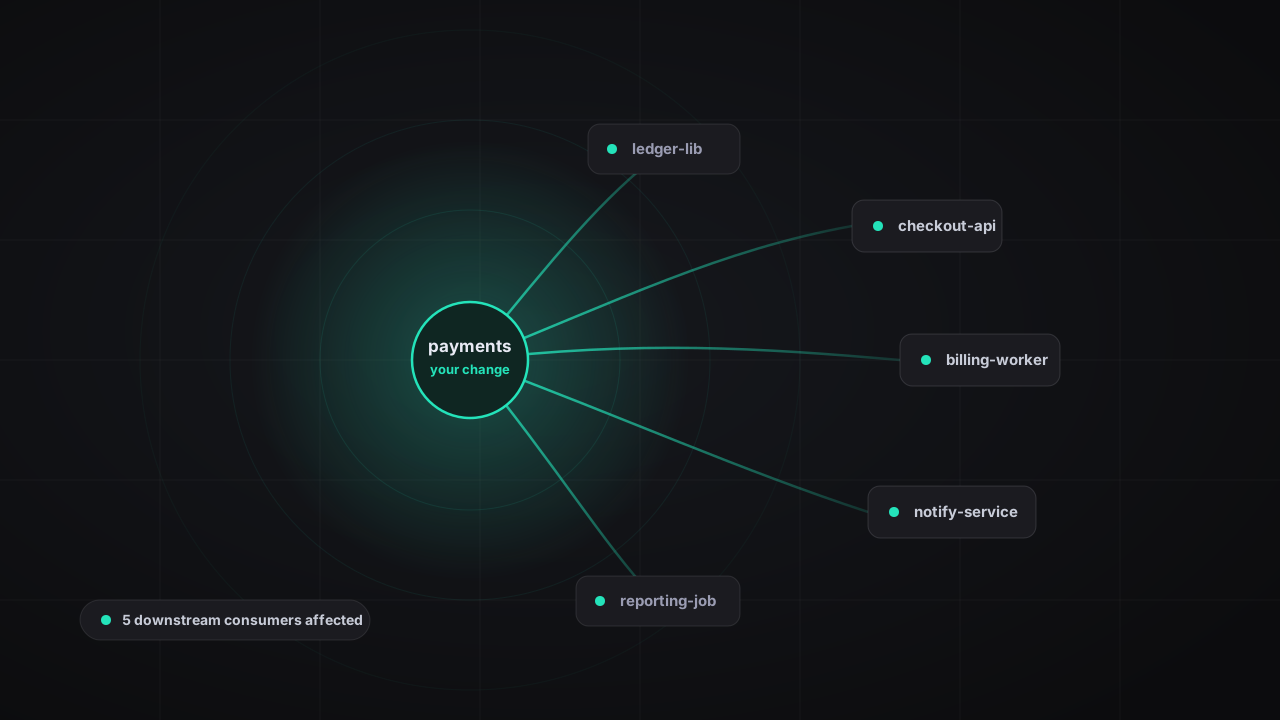
Most code changes look small in the pull request and turn out to be large in the system. You edit one function, the diff is ten lines, the tests are green, and it merges. Then a service two teams away starts failing, because it depended on the behaviour you just changed and nobody in the review knew it existed. The problem was never the ten lines. It was everything connected to them that stayed invisible. Blast radius analysis makes that reach visible before you merge, so a change gets judged on its true size rather than the size of its diff.
The riskiest part of a change is the part you cannot see
When you change a shared service or a common library, the hard question is not whether your own code still works. It is who else relies on it. On a real codebase that answer lives across dozens of repositories and several teams, far outside the file you are editing. A reviewer looking at the diff sees the intent of the change clearly and its consequences barely at all.
This is exactly where AI coding assistants struggle too. A large system does not fit in a model’s context window, so an assistant works from a narrow slice and confidently proposes edits to code it cannot see the far side of. It will happily change a function signature without knowing that four other services call it. The result reviews well and breaks in production, which is the most expensive place to find out.
What blast radius actually means
Blast radius is the full set of things a change can reach. Not just the lines you touched, but the callers of those lines, the APIs and shared libraries that depend on them, the events other services subscribe to, and the teams that own each of those pieces. A ten line diff with a wide blast radius is a bigger deal than a hundred line diff that nothing else depends on. Line count tells you how much you typed. Blast radius tells you how much you are risking.
Code Swan answers that question from a Living Software Catalog, a shared layer of code intelligence that tracks the real system rather than a diagram someone drew last year. Ask what a proposed change would affect and the answer reflects how your services connect today, including the consumer in another repository that never shows up in a keyword search because it calls your code over the network rather than importing it.
Answered before you merge, not after
The value is entirely in the timing. Finding out that a change breaks a downstream consumer is useful at any point, but it is cheap in review and expensive after release. Surfaced on the pull request, an unexpected consumer is a comment and a quick conversation. Surfaced by an incident, it is a rollback, a postmortem, and a team that trusts the next deploy a little less.
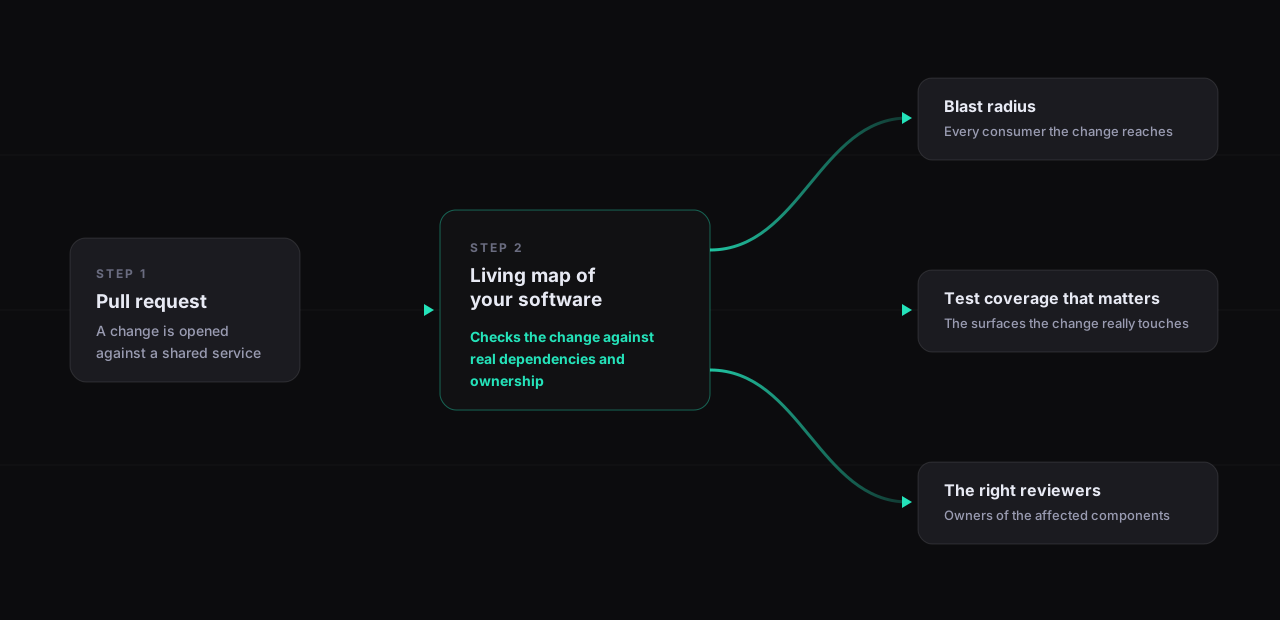 A pull request is checked against the living map, which surfaces affected consumers before the change merges
When the reach of a change is on the table during review, the whole conversation changes. Reviewers stop guessing at what might be affected and start looking at what actually is. Approvals get faster on the safe changes, because the map confirms nothing important depends on them, and slower in the right way on the risky ones, because the people who own the affected code are looking before it ships.
In the tools your engineers already use
Impact only helps if engineers see it without leaving their workflow. Code Swan delivers its intelligence over the Model Context Protocol (MCP), the open standard modern AI coding assistants already speak. Through a single MCP server connection, the question “what would this change affect” can be asked inside Cursor, GitHub Copilot, or Claude while the code is still being written, not after the pull request is open. An assistant can check the blast radius of its own suggestion and pull back before it proposes an edit that quietly breaks a caller it could not see.
The connection is read-only and scoped to the task at hand. An agent can ask about a service’s consumers or the reach of a proposed change without ever getting write access to your code.
Fewer surprises in production, faster reviews
Teams that can see blast radius spend less time on the two worst kinds of work: the incident that traces back to a change nobody realised was risky, and the slow review where everyone is nervous because nobody is sure what a change touches. Both come from the same missing information. Put that information on the pull request and the nervous reviews get decisive and the surprise incidents get rarer. Engineers ship shared code with more confidence because the system, not their memory, is keeping track of who depends on what.
One signal, more than one job
Knowing what a change affects is the groundwork for a lot more than a safer merge. The same understanding of reach tells you which tests are worth running, because it knows the surfaces a change really touches. It tells you who should review, because it knows who owns the affected code. Those are their own topics, and we will get into each in future posts. They all draw on the same thing this one is about, which is a trustworthy answer to a deceptively simple question: if I change this, what else moves?
If you want the fuller picture of why giving AI tools real context matters, start with how engineering intelligence boosts AI in developer platforms. The practical next step is to point it at your own code and see what a real change lights up.
Frequently asked questions
What does blast radius mean for a code change?
Blast radius is the full set of things a change can affect beyond the file in front of you. That means the other services that call the code, the APIs and shared libraries that depend on it, and the teams that own those pieces. Knowing the blast radius before you merge is the difference between a confident review and a hopeful one.
How is this different from what my CI pipeline already tells me?
CI tells you whether the tests you already wrote still pass. It cannot tell you about a consumer nobody thought to test, or a service in another repo that quietly depends on the behaviour you just changed. Blast radius analysis works from a live map of how the whole system connects, so it surfaces the reach a green test run leaves out.
Does it work across repositories and teams?
Yes. The map is built from the whole organisation, so it follows a dependency from one repository into another even when the two teams never talk. A change to a shared service shows its consumers wherever they live.
Can AI coding assistants use this before opening a pull request?
Yes. Assistants that speak the Model Context Protocol, including Cursor, GitHub Copilot, and Claude, can ask what a proposed change would affect while the code is still being written, so the impact is visible before the pull request is ever opened.
How is our source code protected?
Access to your repositories is read-only, and your code is never stored. It is scanned in memory, only metadata about your system is kept, and that metadata is never used to train models. Every tenant is isolated at the database level, and agents receive only the scoped context a task needs.